The journal
Why a Sourdough Loaf Takes Two Days
From the starter’s midday feed to the morning bake: the long cold night inside a country loaf, and why the loaf on the shelf this afternoon was started yesterday.
Four ingredients and a clock
On the sourdough page the loaf gets one line: “A country loaf built over two days from flour, water, salt and a starter older than the bakery.”
Nothing on that list is slow by itself. Flour, water and salt can be weighed and mixed in minutes. The two days belong to the starter and to the cold room, and neither can be hurried without making a different loaf.
The starter
Rosa opened the bakery in 2014 with the starter she had kept going for six years before that, in her own kitchen in Sunnyside. That is what “older than the bakery” means.
The starter is fed twice a day, before dawn and again at midday, with the same white and whole wheat flour the loaves are made from. The feed before dawn keeps it going. The midday feed is the one that becomes bread.
Day one, afternoon: the dough
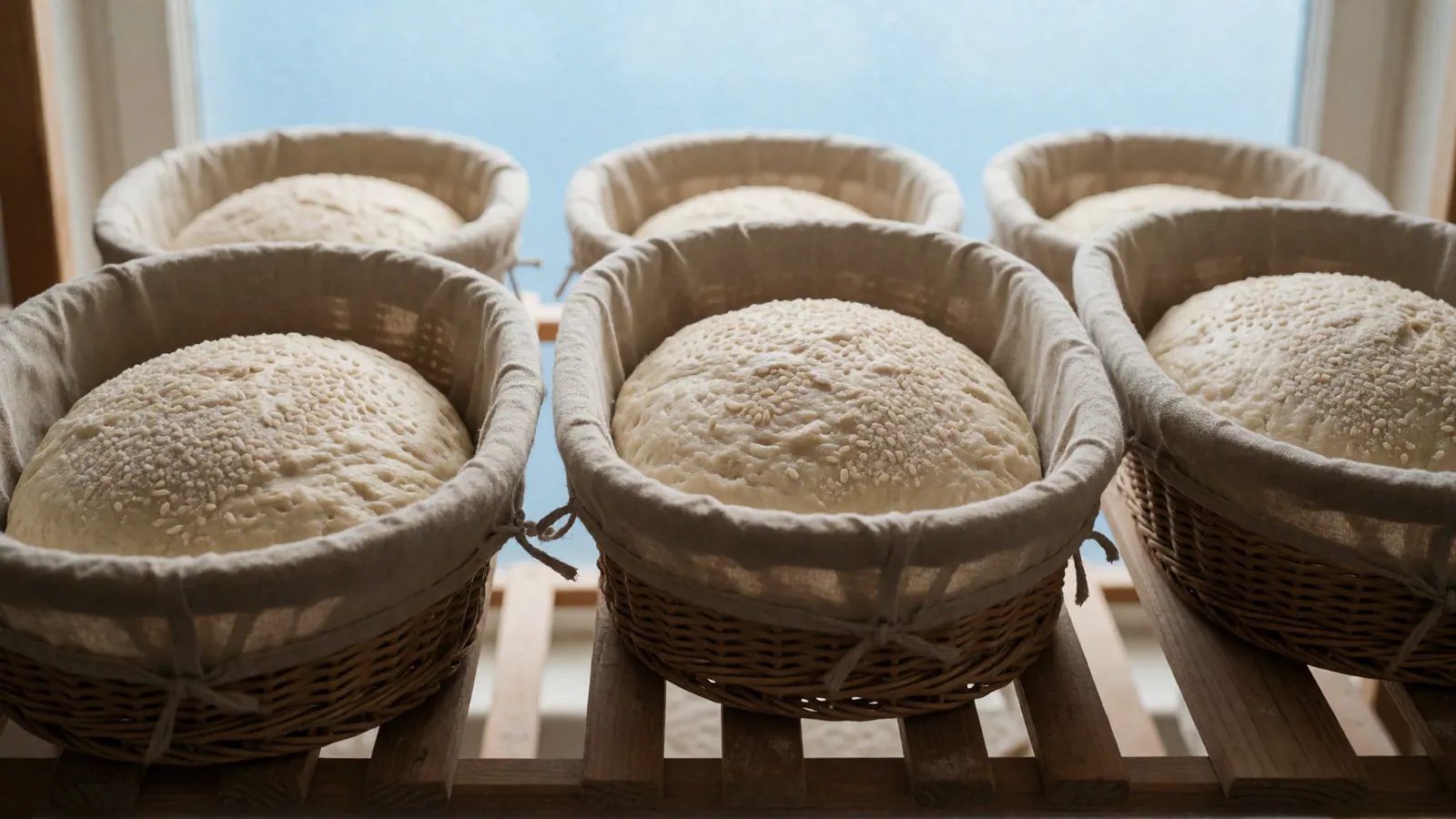
At 2:45pm the day turns towards tomorrow. The starter goes into tomorrow’s country dough, which is folded four times over the next three hours and shaped by six. Then it is divided, shaped and set into cane baskets.
The seeded loaf starts a night earlier still: sunflower, pumpkin, flax and sesame seeds soaked overnight and folded through the dough.
The night: the cold room
At 6pm the shaped loaves go into the cold room, at about 40°F, and the door of the bakery closes. They stay there for ten hours. It is the longest step in the loaf and the quietest, and it is where the flavour comes from: a long, cold rise gives a sourness that is mild rather than sharp.
The weekend stretches the rule rather than breaking it. Monday's first loaves come out of a dough that was mixed on Saturday afternoon and has spent Sunday resting in the cold room, which is why Monday's sourdough is often the best of the week.
Day two, before dawn: the bake
At 4am the baskets come out of the cold room. The ovens have been coming up to about 480°F since the first light went on. From 4:30am the loaves are turned out onto the peel, scored and loaded onto the stone. A load takes about forty-five minutes.
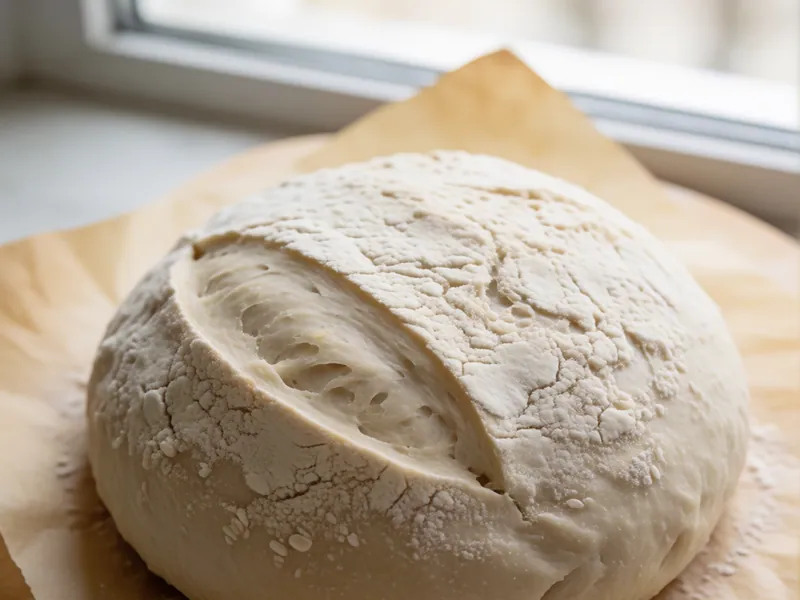
The crust is taken dark on purpose, because that is where the taste of a long bake is. By 6:30am, when the door opens, the first bake is on the shelf. Count back from there, and a country loaf at opening began as a feed of starter at midday the day before — from a starter that had already been fed before dawn.
Why you cannot order one made for this afternoon
The same page puts the consequence plainly: a country loaf ordered at noon for the same afternoon is a loaf that was already shaped yesterday.
That is not a limit of the order form. It is the bread. You can order a country loaf for today — a single loaf needs no notice — and what you are ordering is one of the loaves shaped yesterday and baked this morning. The menu says how long they last: from opening until it runs out — usually early afternoon for the country loaf.
What needs notice is bread that has to be shaped for you. Six country sourdough loaves are a large bread order, shaped the afternoon before for your pickup morning, so they need one day’s notice, and an order placed after 3pm counts that notice from the next day, because that evening’s bake has already been planned.
The same clock sets the last moment to change your mind. An order with a cake, a tray or a large bread order can be cancelled until 6pm the day before pickup — after that it is already being baked. That is also the hour the next morning’s loaves are shaped into their baskets for the cold room, so the deadline is not paperwork: it is the moment the dough for your order is shaped.
Baked today, made yesterday
Put the two days together and you arrive at a sentence worth printing exactly: the loaf on the counter at opening was baked that morning and made the day before. The croissants beside it are the same. We would rather say that than print a promise about mornings that no country loaf could keep, and there is a page of its own about why: baked today is not made today.
More from the journal
What needs notice. Celebration cakes need two days’ notice and catering trays and large bread orders need one, counted in days we are baking — Sunday, when the ovens are cold, does not count. An order placed after 3pm counts its notice from the next day, because that evening’s bake has already been planned.
Order a country loaf
A single loaf needs no notice. A large bread order needs a day, because it has to be shaped the afternoon before.