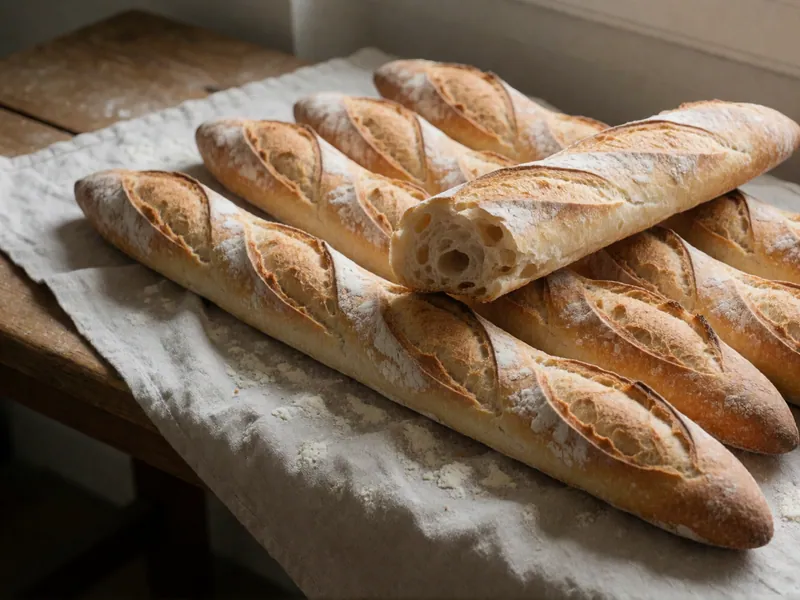
Poolish the evening before; baked at 6am and again at 11am.
Baguettes
A poolish started the night before, baked twice a day, because a baguette is at its best for about six hours.
37-32 61st Street, Woodside, NY 11377
Bread · Woodside, Queens
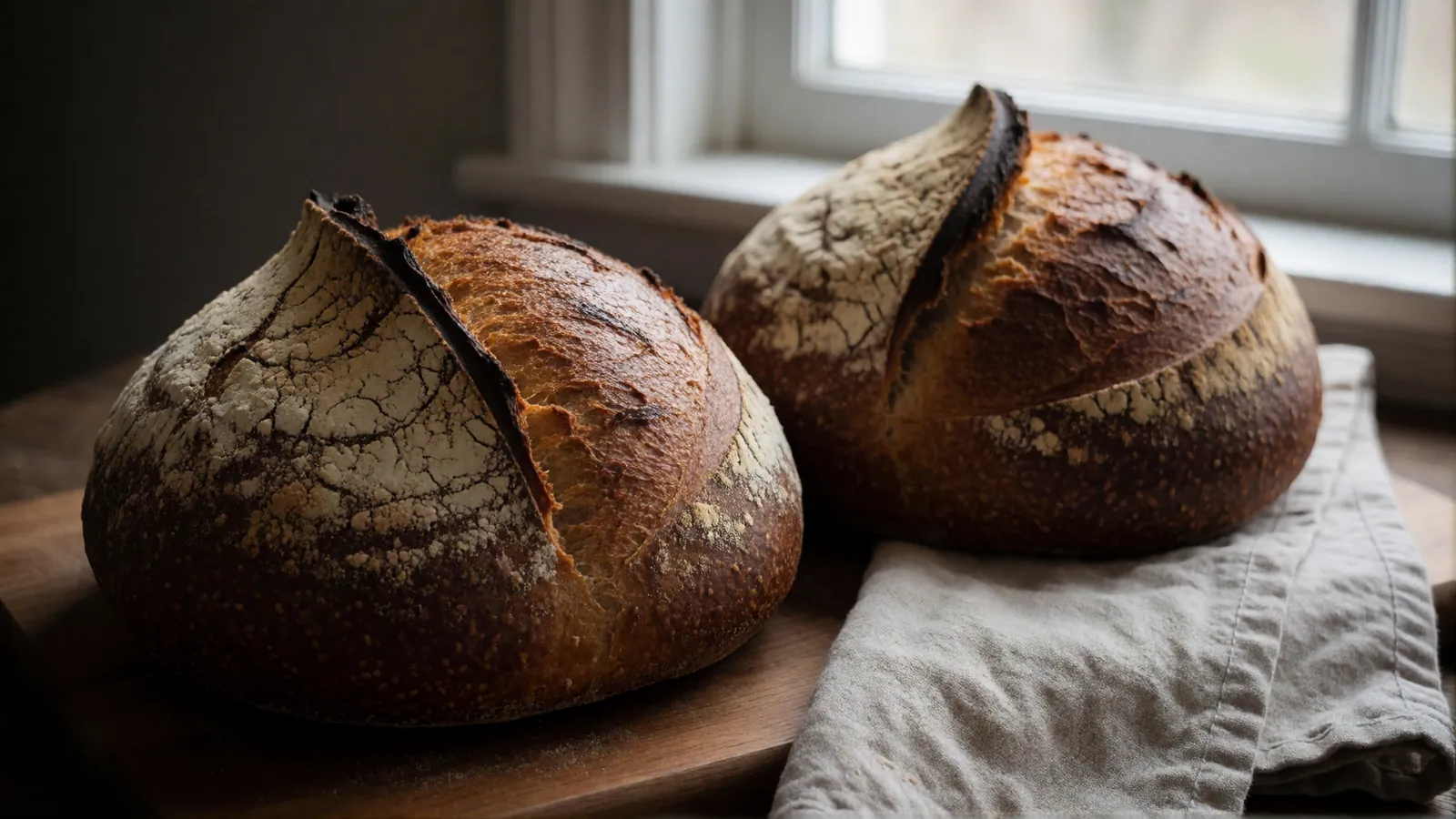
A country loaf built over two days from flour, water, salt and a starter older than the bakery.
How it is made
The starter is fed twice a day, before dawn and again at midday, with the same white and whole wheat flour the loaves are made from. On the afternoon before a bake it goes into the dough, which rests, is folded four times over the next three hours, and is divided and shaped by six in the evening.
The shaped loaves spend the night in cane baskets in the cold room at about 40°F. That long cold rise is where the flavour comes from — the sourness is mild, not sharp — and it is also why the loaf cannot be hurried: a country loaf ordered at noon for the same afternoon is a loaf that was already shaped yesterday.
They are baked on the stone from half past four. The crust is taken dark on purpose, because that is where the taste of a long bake is.
A large order runs the same clock a day further out. Six country sourdough loaves are shaped the afternoon before your pickup morning, so they need One day’s notice, and an order placed after 3pm counts that notice from the next day.
At home
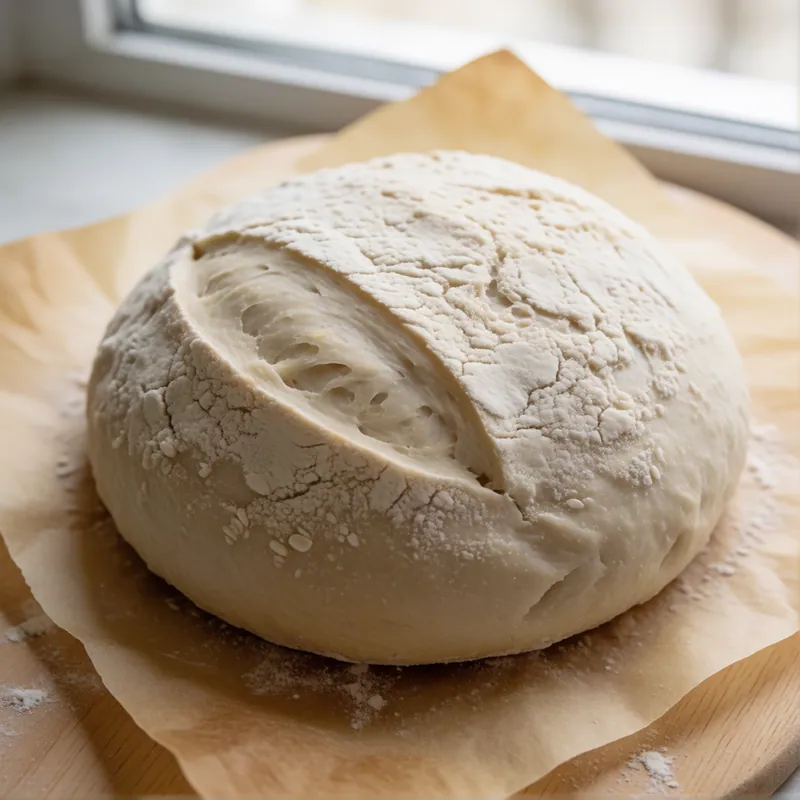
Keep it cut side down on a board for two days, or in a linen or paper bag. Never the fridge, which stales bread faster than the counter does. Slice and freeze what you will not eat by day three, and toast it from frozen.
In the kitchen
Shaped the afternoon before, baked from 4:30am, on the shelf by opening.
Two bakers in. The starter gets its first feed and the ovens start their forty-five-minute heat up to about 480°F.
Yesterday’s shaped loaves come out of the cold room in their baskets. The baguette dough is mixed from the poolish started last night.
Loaves are turned onto the peel, scored and loaded onto the stone. A load takes about forty-five minutes.
The starter gets its midday feed. Croissant dough is laminated for tomorrow, and cake layers are baked for tomorrow’s and the next day’s orders.
The starter goes into tomorrow’s country dough, which is folded four times over the next three hours and shaped by six.
Loaves are shaped into baskets for the cold room. Cakes for tomorrow are iced and piped. The door closes.
Sunday is the bakers' day off, and the ovens are cold. Monday's first loaves come out of a dough that was mixed on Saturday afternoon and has spent Sunday resting in the cold room, which is why Monday's sourdough is often the best of the week.
Allergens
Every item on this page contains wheat (gluten). The seeded sourdough also contains sesame.
One kitchen, six allergens in the air. Everything here is made in one kitchen where wheat, sesame, tree nuts, eggs, milk and soy are used every day. We can tell you what is in a recipe; we cannot promise that any item is free of any allergen. If an allergy is serious, please do not rely on a label here — ask us, and consider a bakery with a dedicated kitchen.
From the same ovens
Poolish the evening before; baked at 6am and again at 11am.
A poolish started the night before, baked twice a day, because a baguette is at its best for about six hours.
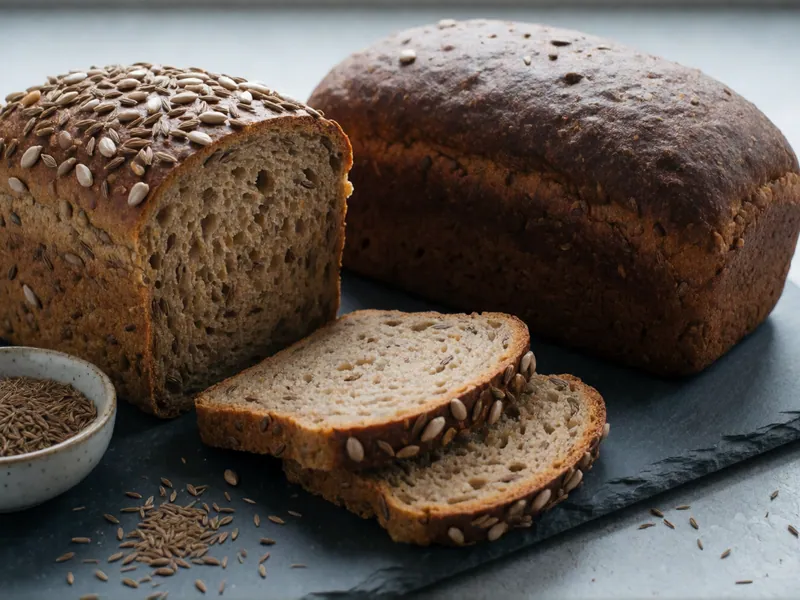
Mixed and shaped in the late morning, baked in the afternoon for the next day.
The seeded rye a deli sandwich expects, and a dark pumpernickel that keeps for most of a week.
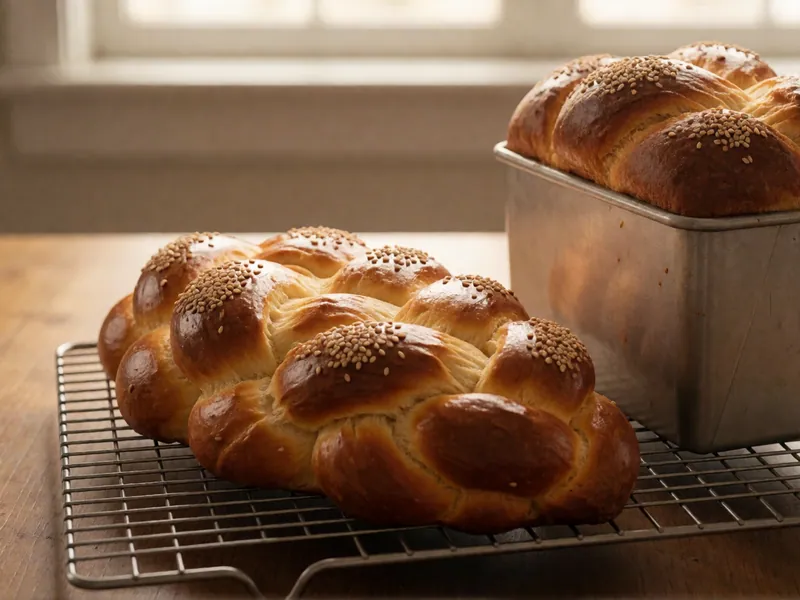
Brioche mixed the day before; challah braided in the morning and baked by eleven.
Two enriched loaves: brioche made with butter and milk, challah made with eggs and oil and no dairy in the recipe.
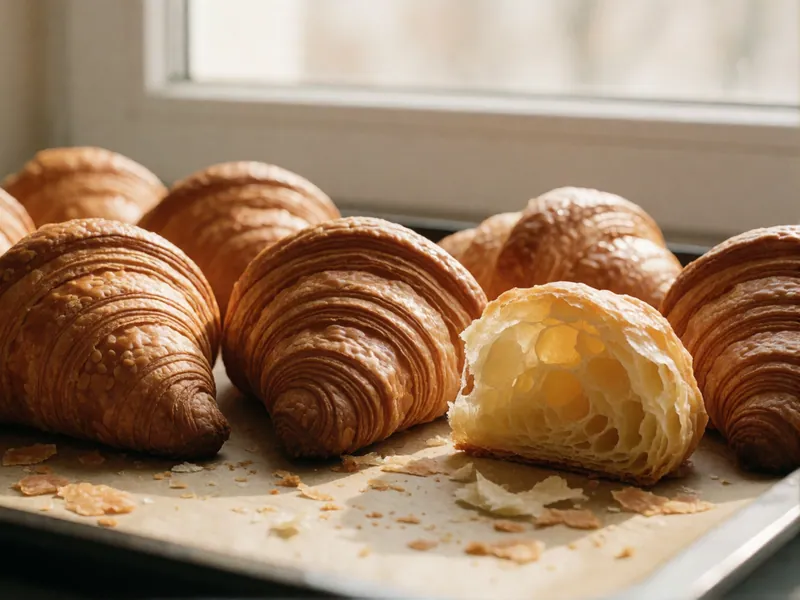
Laminated the day before; baked at 6am and a second tray at 11am.
Laminated a day ahead, proofed overnight, baked from six — and why that is the honest way to make one.
Add it from this page or the menu, choose a day and a fifteen-minute pickup window, and pay at the counter when you collect.