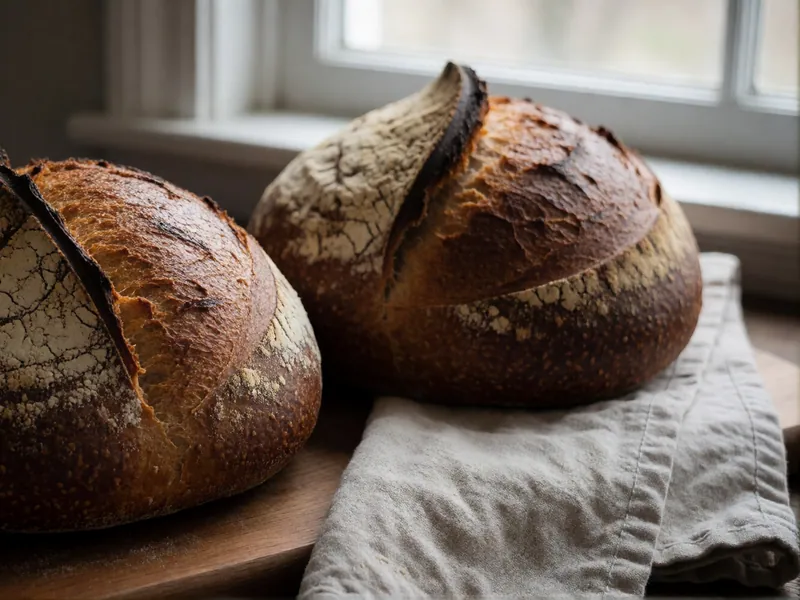
Shaped the afternoon before, baked from 4:30am, on the shelf by opening.
Sourdough bread
A country loaf built over two days from flour, water, salt and a starter older than the bakery.
37-32 61st Street, Woodside, NY 11377
The menu
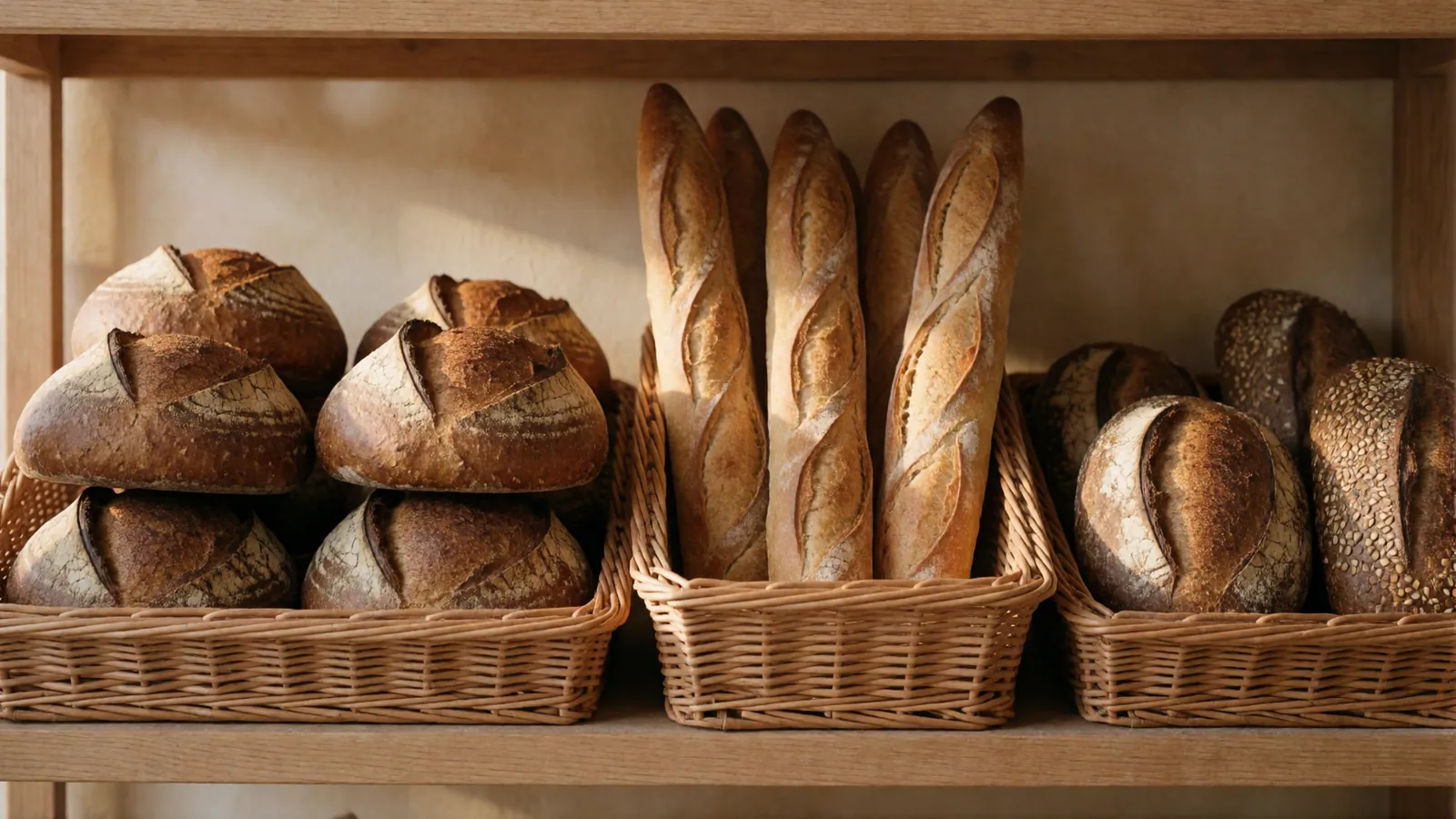
Sourdough, baguettes, rye and enriched loaves, baked before the door opens.
Bread is the part of the menu that cannot be hurried, which is exactly why it is worth ordering ahead. A country loaf collected in the morning was shaped the afternoon before and spent the night rising slowly in the cold room; the baguettes began the evening before as a poolish. Ordering a loaf does not start it. It keeps one for you.
Everything below can be collected the same day except six country sourdough loaves and a dozen baguettes, which need One day’s notice because they are planned into the bake the day before. A same-day order is ready from about forty-five minutes after you place it.
The country loaf also comes halved at the counter, for a household of one or two, and the rosemary focaccia is cut into squares if you ask. Why a country loaf cannot be ordered for this afternoon is a story of its own: Why a Sourdough Loaf Takes Two Days.
One loaf at a time
Each of these has a page of its own: what goes into it, when it is baked, and how to keep it once it is home.
Shaped the afternoon before, baked from 4:30am, on the shelf by opening.
A country loaf built over two days from flour, water, salt and a starter older than the bakery.
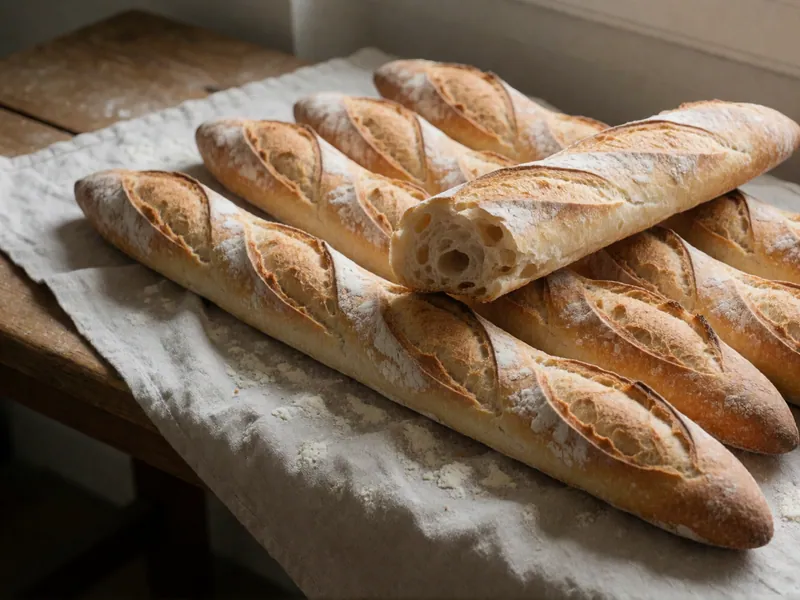
Poolish the evening before; baked at 6am and again at 11am.
A poolish started the night before, baked twice a day, because a baguette is at its best for about six hours.
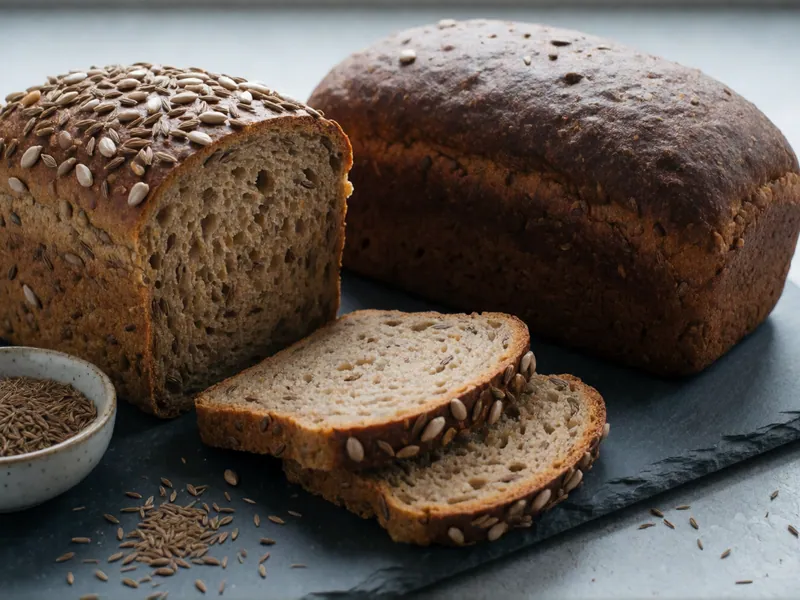
Mixed and shaped in the late morning, baked in the afternoon for the next day.
The seeded rye a deli sandwich expects, and a dark pumpernickel that keeps for most of a week.
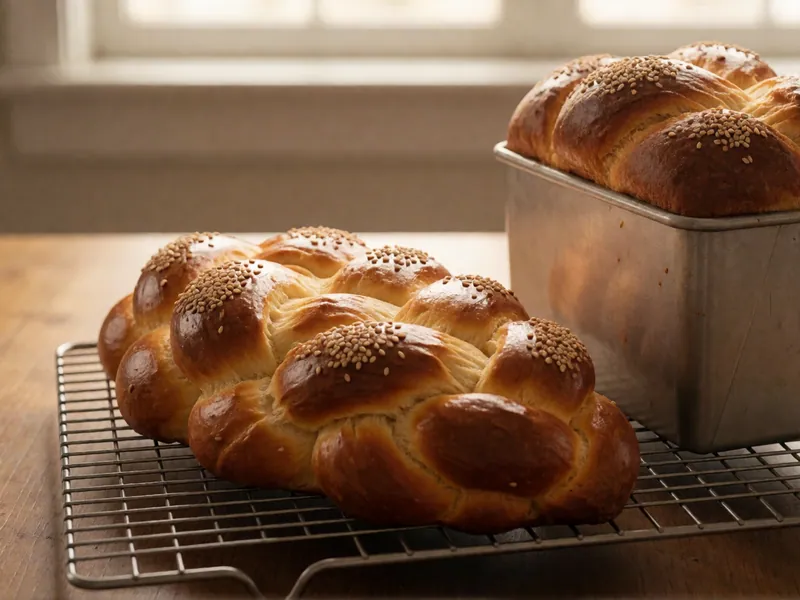
Brioche mixed the day before; challah braided in the morning and baked by eleven.
Two enriched loaves: brioche made with butter and milk, challah made with eggs and oil and no dairy in the recipe.
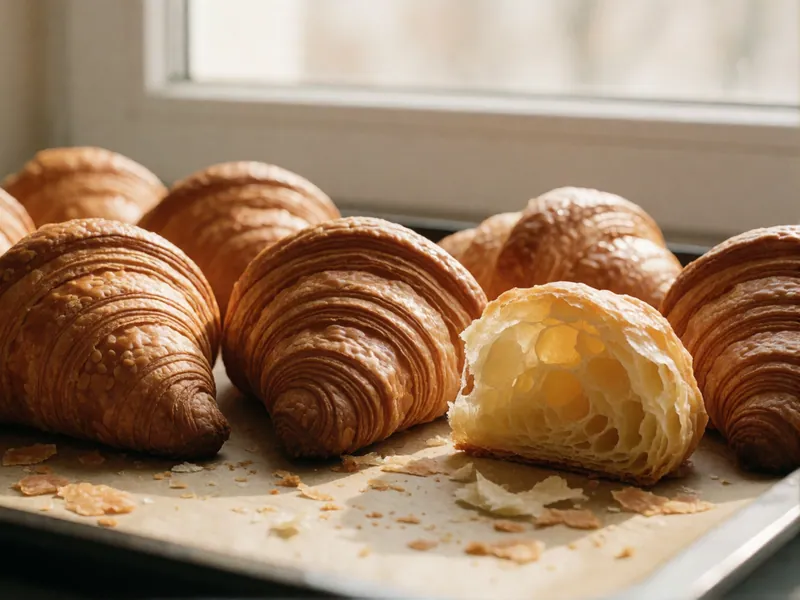
Laminated the day before; baked at 6am and a second tray at 11am.
Laminated a day ahead, proofed overnight, baked from six — and why that is the honest way to make one.
For a kitchen
Bread for restaurants, cafés and offices, on a standing order set up by a conversation.
The rest of the menu
Everything on the menu goes into one order, collected in one window and paid for at the counter.
Choose from the menu, pick a day and a fifteen-minute window, and pay at the counter when you collect.