About the photographs
How these pictures were made
Every photograph on this site was generated for this demonstration. None shows a real bakery, a real cake anybody ordered or a real member of staff.
Generated, every one
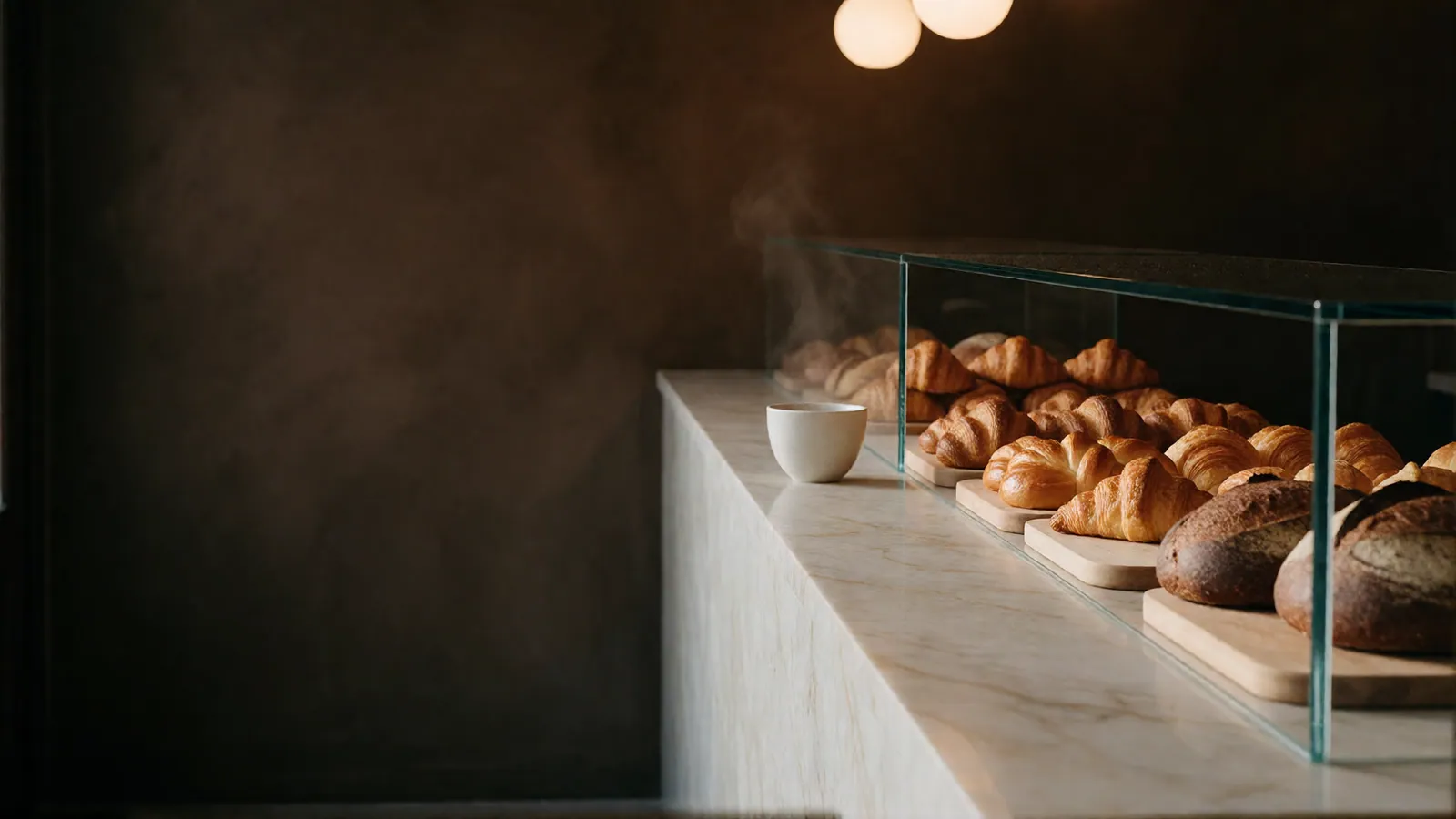
No photograph on this site was taken with a camera. Each one was generated by an image model from a written description, looked at against the rules below, and either kept or described again and made again. The site says so in its navigation and here, because a photograph on a bakery’s website usually means “this is what you will get”, and on a demonstration of a bakery that does not exist the only honest thing a picture can say is what bread like this looks like.
Nothing in any picture can be read
A bakery is full of surfaces that carry words — cups, bags, boxes, boards, labels, sacks — and each of them is where an image model puts invented ones. So the rule is that no writable surface appears in any frame unless it is plain and seen to be plain, and it is kept by leaving the object out rather than by asking for it to be blank.
- Coffee is in white ceramic, never a paper cup. Bread is wrapped in plain parchment and twine. Nothing is boxed.
- There is no chalkboard, menu board, price tag or label anywhere. The menu is on the page.
- Flour appears in a bowl, on a bench or in the air, never in a sack.
No writing on any cake
The celebration cakes carry fruit and flowers at one edge and a smooth, empty top. A generated “Happy Birthday” would be a plausible but wrong message on the largest surface in the picture — and it would also be a photograph of a message nobody ordered. The page about writing on a cake shows the piping bag beside a top that has not been touched.
No machine fronts, and no makers
Espresso machines, grinders, mixers and ovens all carry a maker’s plate on the front, so none of them is shown from the front. The picture of the oven on the day page is the lit mouth of a stone deck oven and nothing of its face. No maker of anything — coffee, flour, butter, chocolate or equipment — is named in the copy either.
No shopfront, no entrance, nothing framed on a wall
In New York City a bakery’s inspection grade card is posted at its entrance. This bakery has never been inspected and has no grade, so no picture shows its front, its entrance or a window with anything on it — a street front is exactly where an image model would draw a card that does not exist. Windows are plain glass onto trees, and the getting-here page looks up at the elevated line rather than along a street of signs.
For the same reason the walls are bare plaster. A framed document on a food business’s wall is read as a permit or a grade whether it is one or not, and this bakery has neither to hang. There is a page about that as well: why there is no grade card here.
No sourdough is ever cut open
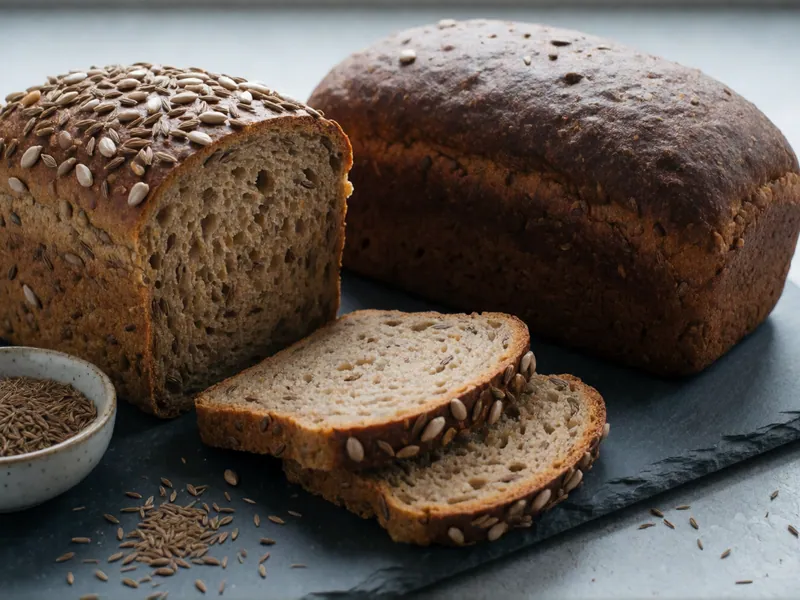
The image model draws a believable loaf and, cut open, an impossible crumb: holes round and evenly spaced, like a cheese, where a real country loaf is open, glossy and irregular. Every first attempt that cut a sourdough loaf did it. So no sourdough on this site shows its cut face at all. Rye, whose real crumb is dense and even, is allowed to show its slices, and a cut croissant is looked at full size before it is kept.
People only in portraits
There are four photographs of people on this site, and they are the portraits on the page about the bakers: shoulders up, against a bright window or a background so far out of focus that there is no wall behind them for anything to hang on. There are no hands anywhere — hands are the one subject harder to draw than bread, and a frame with both is two chances to be wrong — and no customer and no child in any picture. The four people are invented, like the bakery.
The five that were sent back
Every picture was chosen from more than one attempt. These were not chosen from at all, because nothing in the first attempts could be used, and each was described again and made again:
- The sourdough page’s header. The whole loaf was believable; the cut loaf beside it had a crumb of evenly spaced round holes, like a cheese. It was described again as two whole loaves with no cut face anywhere.
- The bakers’ bench. Every round of dough on it had been scored with crosses and leaf patterns, at a stage when nobody scores dough — a baker would see it at once. It was described again with smooth rounds.
- The opening hours page. Both versions hung framed pictures on the wall and showed shopfronts through the window. It was described again with bare plaster and trees in the glass.
- The getting-here page. A street corner came back with signs on poles and a newspaper box, each of them a surface for invented words. It was described again as the steel underside of the elevated line against the morning sky.
- The header of the article on keeping sourdough. The half loaf faced the camera with its cut face, and the holes in it were round and evenly spread — the same impossible crumb again. It was described again with the loaf wrapped in linen, so that only crust shows.
And one was not made again at all. A close-up of a cut country loaf, whose whole subject was the crumb, drew the same impossible holes in every attempt, so it was taken out of the site rather than tried once more: another attempt at a subject the model cannot draw is another chance to show a wrong loaf to the one reader who would know.
Why this has a page of its own
Because a visitor is entitled to know which parts of a website show a real place and which do not, and a line in a footer that nobody reads is the version that technically told you. The rest of the site works the same way: the telephone number says it reaches nobody, the order form says nothing will be baked, and nobody here is given a title they could not have earned.
About the photographs. Every photograph on this site was generated for this demonstration. None shows a real bakery, a real cake anybody ordered or a real member of staff.
Order ahead, collect in fifteen minutes
Choose from the menu, pick a day and a fifteen-minute window, and pay at the counter when you collect.